


The Best Sleep Position for Better Rest, Less Pain, and a Healthier Spine
Have you ever woken up with a stiff neck, aching shoulders, or a sore lower back and wondered what happened overnight?
The answer may not be your mattress, but could be your sleep position.
Since we spend nearly one-third of our lives sleeping, the position we sleep in plays a major role in how well our bodies recover. During sleep, your muscles relax, tissues repair, and your nervous system resets for the next day. But if your spine is twisted, unsupported, or under constant pressure for 7-9 hours each night, you may wake up feeling worse instead of refreshed.
So, what’s the best sleep position?
The Best Sleeping Position for Your Spine
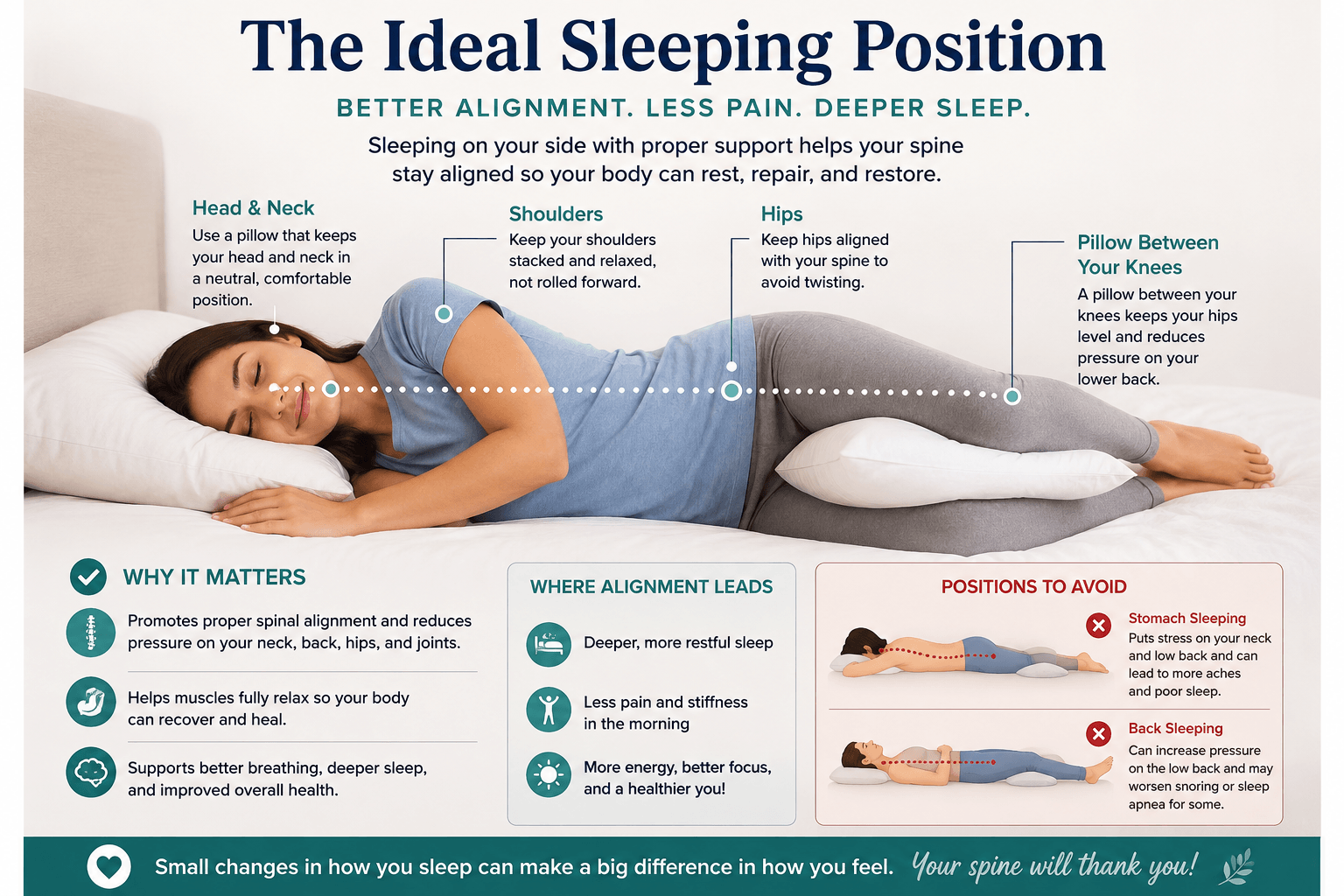
For most people, sleeping on your side is considered the healthiest position for spinal alignment.
The ideal setup includes:
- A pillow that keeps your head and neck in a neutral position.
- Your shoulders stacked directly over each other.
- Your hips aligned, without twisting forward or backward.
- A small pillow placed between your knees to keep your pelvis level and reduce stress on your lower back.
When your body is supported this way, your spine stays in a more natural position from your neck to your pelvis. This decreases unnecessary strain on your joints, muscles, ligaments, and nerves while you sleep.
One simple way to check your alignment is this:
Imagine a straight line running from your nose to your belly button. If those two points stay aligned while you’re lying on your side, your spine is likely in a much healthier sleeping position.
Why Sleep Position Matters More Than You Think
Sleep isn’t just about getting enough hours.
It’s when your body performs some of its most important healing processes:
- Muscle recovery
- Tissue repair
- Hormone regulation
- Immune system support
- Brain detoxification and memory consolidation
- Nervous system restoration
When your body spends the night fighting against poor posture instead of recovering, you may notice:
- Neck pain
- Shoulder pain
- Low back pain
- Hip discomfort
- Headaches
- Numbness or tingling in your arms or legs
- Restless sleep
- Morning stiffness
Over time, poor-quality sleep has also been associated with increased inflammation, chronic pain, depression, anxiety, metabolic disorders, and decreased overall health.
How Your Spine Affects Sleep Quality
Your spine houses and protects your spinal cord, which serves as the communication highway between your brain and every organ, muscle, and tissue in your body.
When the spine moves well and maintains healthy alignment, the muscles surrounding it can relax more efficiently during sleep.
However, if joints become restricted or irritated, surrounding muscles often remain tight and protective. This can make it difficult to find a comfortable sleeping position or stay asleep through the night.
Many people assume they simply “sleep wrong,” when in reality their body is trying to protect an already irritated area.
Can Chiropractic Help You Sleep Better?
While chiropractic isn’t a treatment for insomnia, many patients report sleeping more comfortably after improving spinal mobility and reducing mechanical stress on the body.
Healthy spinal movement may help by:
- Reducing tension in the neck and back
- Improving joint mobility
- Allowing muscles to relax more naturally
- Making comfortable sleep positions easier to maintain
- Supporting normal nervous system function
When your body is more comfortable, it’s often easier to fall asleep, stay asleep, and wake feeling more refreshed.
Think of it this way: if your body isn’t spending all night guarding a stiff or irritated joint, it has more opportunity to focus on recovery.
Is Sleeping on Your Back Better?
Sleeping on your back can also be a good option for some people, especially if you place a pillow underneath your knees to help maintain the natural curve of your lower back.
However, back sleeping isn’t ideal for everyone.
People with sleep apnea or those who snore heavily often experience fewer breathing interruptions when sleeping on their side.
Is Sleeping on Your Stomach Bad?
For most people, stomach sleeping places the greatest amount of stress on the spine.
Because your head must remain turned to one side for hours, your neck stays rotated throughout the night. At the same time, your lower back often arches excessively, increasing pressure on the lumbar joints.
If you’re a lifelong stomach sleeper, changing habits overnight isn’t easy. Try placing a pillow under one hip or gradually transitioning to side sleeping over several weeks.
Simple Tips for Better Sleep Posture Tonight
You don’t need to buy an expensive mattress to improve your sleeping posture.
Start with these simple changes:
- Sleep on your side whenever possible.
- Choose a pillow that keeps your neck level with your spine—not bent upward or downward.
- Place a pillow between your knees.
- Keep your shoulders stacked instead of rolling forward.
- Avoid sleeping with your arm tucked underneath your pillow.
- Replace old pillows that no longer provide proper support.
- Stretch gently before bed if you tend to carry tension in your neck or hips.
Even small improvements in your sleeping position can make a noticeable difference over time.
Better Sleep Starts with Better Alignment
Quality sleep is one of the most powerful tools your body has for healing, repairing, and restoring itself.
While nutrition, stress management, and exercise all play important roles, your sleep posture is often an overlooked piece of the puzzle.
If you regularly wake up with pain, stiffness, headaches, or feel like you’re never truly rested, your sleeping position—and your spinal health—may deserve a closer look.
Supporting your spine throughout the night helps your body spend less energy compensating and more energy doing what sleep was designed for: helping you heal.

References
- National Sleep Foundation. Sleep Foundation. https://www.sleepfoundation.org
- Harvard Health Publishing. The Importance of Sleep. Harvard Medical School.